Helping Preschoolers With Responsibility (What It Really Looks Like)
Nobody walks up to a 4-year-old and says, “Be responsible,” and gets a useful result. Responsibility is real, but that phrase is too big and too abstract for most preschoolers to act on.
What helps more is knowing what responsibility looks like at this age, where it begins, and how to incorporate it into everyday moments without turning your day into a constant reminder.
Why “Be Responsible” Doesn’t Work for Preschoolers
Preschoolers live in the concrete. They understand actions they can see and feel, not big character words. Telling a preschooler to “be responsible” is like telling them to “be mature.” It doesn’t give them a clear next step.
It also skips over how responsibility actually grows. It doesn’t show up all at once, and it doesn’t start with independence.
Common frustrations adults feel
Most adults aren’t asking for anything wild. They’re usually hoping a child will:
- Take care of their things
- Clean up after themselves
- Try before giving up
When those things don’t happen, it can feel like the child “should know better,” even when the expectation is ahead of their age.
Realistic Expectations for Preschool Responsibility
Not perfection or total independence
Responsibility for young children does not mean they remember everything on their own. It doesn’t mean they do tasks perfectly. It doesn’t mean they act like a much older kid.
At this stage, a child may need prompts, help, and lots of repetition. That’s normal.
The simple starting point
For preschoolers, responsibility starts with one core idea: “This is something I can take care of.”
Not everything. Not all day long. Just one small piece at a time.
How Responsibility Begins Internally
Start with self and “my stuff”
Before kids can think much about how their choices affect other people, they need chances to take care of themselves and their own things. That’s the first layer.
This is where responsibility can grow in a way that feels natural, not forced.
Everyday examples of internal ownership
Internal responsibility often shows up in small moments, like:
- Putting away the toys they were using
- Carrying their own backpack or lunchbox
- Trying to zip up a jacket before asking for help
These actions look simple, but they carry a message: “I have a role here, and I can do it.”
More Small Wins That Build Capability
Personal care moments count, too
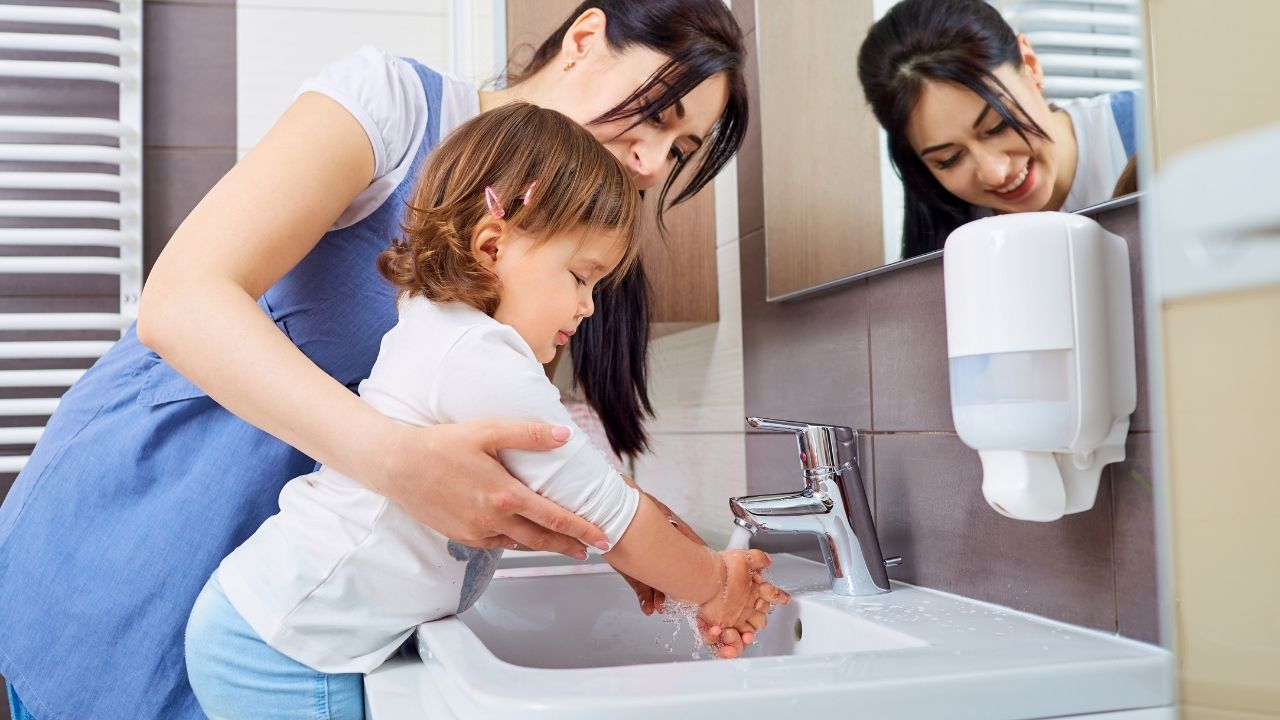
Responsibility isn’t only about cleaning the playroom. It can also look like basic self-care and care of belongings, such as washing hands after getting messy or keeping track of a favorite item.
Those are real responsibilities in a preschooler’s world because they connect to their body and their daily routine.
“Finishing up” matters
Another big building block is finishing up a small task they started. That might be returning markers to the bin, putting a book back on the shelf, or throwing away scraps after a craft.
Even if they don’t do it fast, or they need a reminder halfway through, they’re practicing follow-through.
Ownership vs. Control (A Key Shift)
Reframe the goal
A helpful mindset shift is this: the goal of responsibility isn’t control, it’s ownership.
Control focuses on whether the child complies. Ownership focuses on whether the child understands, “This part belongs to me.” That’s a different target.
Why this builds a stronger self-image
When responsibility is framed as ownership, the tone changes. The child doesn’t feel managed as much; they feel capable. They experience responsibility as something they can handle, not something they’re always getting wrong.
The Power of Calm, Guiding Language
Why sharp reminders can shut kids down
Repeated corrections and sharp reminders can turn responsibility into a power struggle. A preschooler who feels pushed may resist, shut down, or rely on the adult even more.
Guiding language works better when it’s calm and clear.
Real-life phrases you can use
These examples keep the adult involved without taking over. They also give the child the next step:
- “Let’s check what you still need to put away.”
- “Which ones were you using?”
- “Do you want to try first, or should I help?”
- “What’s the next step before we move on?”
- “Let’s take care of your things together.”
This kind of language keeps responsibility shared, but moving in the child’s direction over time.
Keeping Responsibility Shared Yet Shifting
Adult support, child involvement
At first, many responsibilities are “together” tasks. That’s not a problem, it’s the process.
The adult supports, but the child stays involved. Over time, the support fades, and the child takes on more of the steps. That’s the shift that matters.
Long-Term Benefits of Small Steps
A child starts to see themselves differently
When kids get small responsibilities they can handle, they start to view themselves as capable, helpful, and trusted. That identity sticks.
Skills that grow from that foundation
Those early moments become the base for later skills like:
- Follow-through
- Cooperation
- Confidence
- Being someone others can count on
None of that starts with lectures. It starts with everyday practice.
Responsibility Develops Through Practice (Not Pressure)
Forgetting and inconsistency are part of it
If a child forgets, needs reminders, or does a task differently each time, that doesn’t mean responsibility isn’t happening. It means it’s developing.
Responsibility grows through practice, support, and time, not pressure.
Expanding Beyond the Self Comes Next
Once children understand what they’re in charge of, they begin to notice that what they do affects other people. That’s when responsibility starts to stretch beyond their own needs and belongings.
Preschool responsibility doesn’t start with big expectations or perfect follow-through. It starts with small ownership, one job that a child can actually handle. Keep the language calm, keep the steps simple, and treat reminders as part of learning. When kids feel capable, they’re more likely to keep trying, and that’s where real responsibility begins.