When a Child Starts Cleaning… But Doesn’t Finish
Have you ever asked a child to clean up, and they actually begin, but a few minutes later, the job still isn’t done?
Maybe they got distracted. Maybe they moved things around but didn’t really finish.
Or maybe it somehow turned into an even bigger mess.
This is something that comes up often with young children. It is easy to assume they are not listening. But most of the time, that is not the issue.
In many cases, children are willing to help. They just do not yet know how to carry a task all the way through.
Why Follow-Through Is Hard for Young Children
When a child starts cleaning but does not finish, it usually comes down to a few things:
- They are not sure what “done” looks like
- The task feels too big
- They lose track of what they were doing
Finishing a task is a skill. Like any skill, it has to be taught and practiced.
Using a Story to Build Understanding
One simple way to support this skill is through storytelling.
A helpful example is Just a Mess by Mercer Mayer.
In this story, the child is asked to clean up and he does try. As he works, though, things do not come together. He moves items around and shifts things, but the mess does not get resolved.
This mirrors what is often seen with young children.
As you read, the goal is not to point out whether the character is doing it right or wrong. Instead, guide children to notice what is happening.
You might ask:
- What is he trying to do right now?
- Is it getting easier or harder to clean?
- What could help him finish?
These kinds of questions shift the focus away from obedience and toward understanding how to complete a task.
Connecting the Story to Real Life
After reading, bring the idea back to the child’s own experience.
You might say, “Sometimes when we clean up, we start but do not finish. Let’s think about what helps.”
Keep the conversation simple and concrete. This helps children make a clear connection between the story and their own actions.
Three Ways to Support Follow-Through
1. Make the Ending Clear
Many children do not finish because they are unsure what the finished result should look like.
Instead of saying, “Clean up,” try giving a clear and specific outcome:
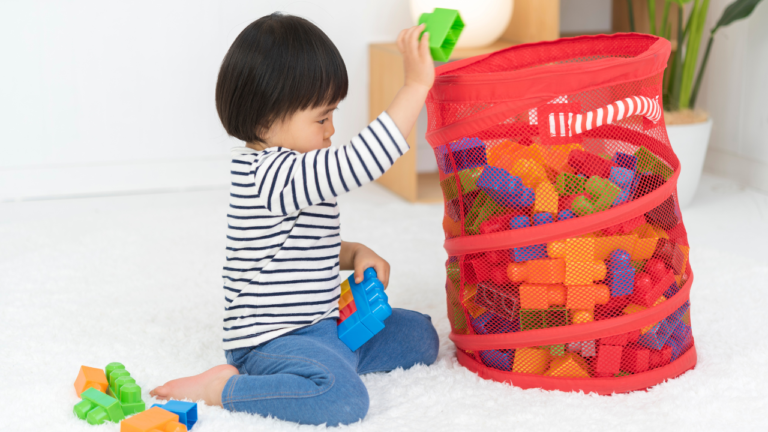
- “All the blocks go in this bin.”
- “The table is clean when nothing is on it.”
It can also help to show them what finished looks like before they begin.
2. Keep the Task Small
Large tasks can feel overwhelming. When that happens, children can lose track of what to do next.
Instead of asking them to clean an entire room, focus on one area:
- “Start with these toys.”
- “Let’s clean this shelf.”
A smaller task makes it easier to stay focused and reach the end.
3. Stay Nearby at the Beginning
Follow-through is more difficult when children are expected to manage the task on their own right away.
You do not need to do the task for them, but staying close at the start can help them stay on track.
Offer simple prompts such as:
- “What still needs to go back?”
- “What comes next?”
Even a minute or two of support can make a difference.
A Helpful Shift in Perspective
When a child starts but does not finish, it is usually not about behavior.
It is more often about:
- Not knowing what “done” looks like
- Feeling overwhelmed
- Losing track of the task
When these pieces are adjusted, follow-through becomes more manageable.
Building the Skill Over Time
Finishing a task is something children learn with practice, guidance, and clear expectations.
Visual supports and simple step-by-step routines can also help. They give children a clearer picture of what responsibility looks like in action.
With time and support, you will begin to see progress. Children become more confident, more focused, and more able to complete what they start.