When a Child Starts Editing Themselves
Today I want to talk about something that rarely looks like a behavior problem, but quietly changes how a child participates both in the classroom and at home.
Sometimes a child doesn’t stop engaging all at once. Instead, they gradually begin editing themselves.
They share less about their life. They choose safer answers. They watch a little longer before speaking.
Nothing dramatic happened. There wasn’t a big moment that anyone could point to. But they’ve been studying the room.
They’re trying to figure out whether it’s okay for them to fully be there, or whether only certain versions of them seem to fit.
And for children ages 3–5, this isn’t something they’re thinking about in big, abstract terms like identity or acceptance. The question they’re really answering is much simpler: “Can I be myself here?”
They learn the answer mostly from adult reactions.
The Small Moments That Shape Big Decisions
Preschoolers are constantly observing how adults respond to differences, and not the dramatic ones. The ordinary ones.
Maybe a child talks about a food their family eats that no one else recognizes. Maybe they pronounce a word differently. Maybe they describe a holiday, a routine, or a grandparent in a way that feels unfamiliar to the rest of the group.
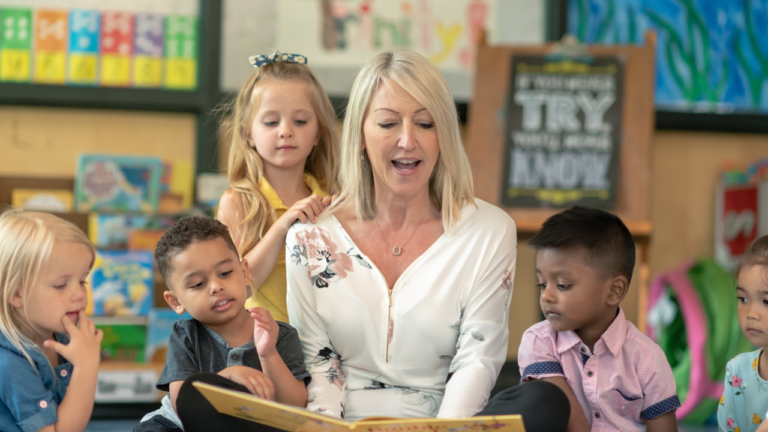
After moments like that, they may look at the adult.
Did the adult pause and show genuine interest?
Did they help the group understand?
Or did they quickly redirect back to what felt more familiar?
As adults, we often see those choices as simply keeping the lesson on track. But children don’t experience them that way. They experience them as information about which parts of people fit comfortably into the space and which parts create subtle tension.
Even in kind, well-managed classrooms, children begin learning which contributions are easy for others to receive and which ones are better left unsaid.
Comfort and Belonging Aren’t the Same Thing
As teachers- and as a former teacher myself- we work hard to create comfortable environments. That’s a good instinct. But comfort can come from two very different places.
One kind of comfort comes from sameness. Everything stays predictable, familiar, and neutral. Participation feels smooth when deas align with what usually happens.
The other kind of comfort comes from acceptance. Differences show up, and the room adjusts naturally. The flow doesn’t collapse just because something unfamiliar enters the space.
In environments built on sameness, children participate carefully. They often wait to see if their idea matches the pattern before sharing it.
In environments built on belonging, children participate more freely because they’ve learned that the group can handle and adjust to different input.
When Withdrawal Gets Mistaken for Maturity
When a child becomes unsure, they don’t always act out first. Sometimes they withdraw first.
They simplify themselves.
Adults may interpret this as shyness or maturity. But sometimes it’s actually self-protection. The child has learned that it feels easier- and safer- to bring less of themselves into the room.
If you pause and reflect on your own life, you may recognize this feeling. Have you ever entered a classroom, a workplace, or a social setting and quietly wondered which version of yourself would be most acceptable there?
I know I have.
You begin filtering what you say. You adjust how you move through the space. You carefully decide which stories to share and which to keep to yourself.
Participation slowly turns into performance- not in a dramatic way, but in a strategic one. You’re cooperating. You’re engaged. But you’re no longer fully connecting.
Belonging Is Built in the Pause
Belonging isn’t created simply by telling children that they belong. It’s created in small, everyday moments- especially when something unfamiliar enters the conversation.
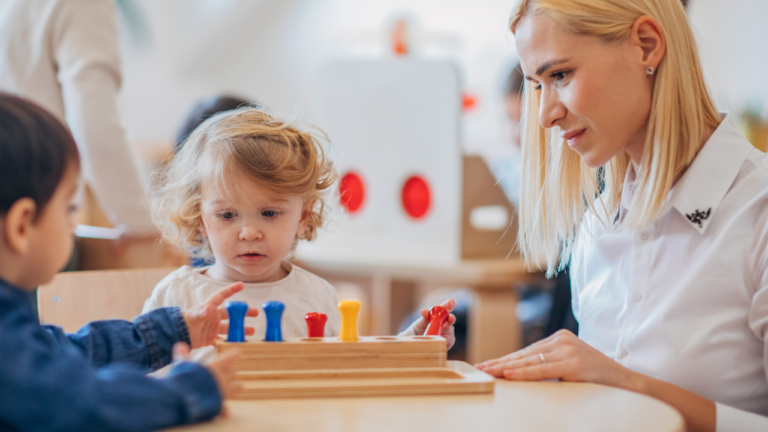
A child shares something different, and there is a brief pause before the adult responds. That small window of time carries more weight than we often realize.
If the adult pauses, acknowledges the comment, and helps the group stay open, the room subtly expands. If the adult rushes past it in an effort to keep everything moving, the room can begin to feel smaller.
This doesn’t mean every comment needs to become a full discussion. The goal isn’t to spotlight differences, but to show that differences don’t disrupt participation. The message children absorb is whether the space adjusts for people or whether people must adjust themselves to remain comfortable in the space.
The Quiet Decision Children Make
After enough of these moments, children make quiet decisions.
They may still follow directions. They may complete their activities. They may appear cooperative and “well behaved.”
But they stop offering parts of themselves.
Those unspoken rules they’ve gathered- about what fits and what doesn’t- often travel with them into new classrooms and new environments.
I recognize this because I did it too. And chances are, at some point in your life, you may have done it as well.
What We Make Room For
Sometimes the most important part of teaching isn’t what we carefully plan to say. It’s what we make room for when a child shows us who they are.
Each unfamiliar comment offers the group an opportunity. When we lean into those moments with curiosity, children learn openness. When we move past them too quickly, children learn caution.
Over time, those lessons shape how they show up- not just in our classrooms, but in every space they enter afterward.
And perhaps the question to reflect on isn’t whether everything ran smoothly today, but whether, when a child shared something different, our response made the room feel a little bigger.