When Preschoolers “Won’t Cooperate”- What Might Really Be Going On
There are moments in the day when it feels like everything would run so much smoother if children would just cooperate.
Cleaning up the toys. Lining up to go outside. Getting ready for circle time.
Simple things… at least in theory.
But when it doesn’t happen, it can feel frustrating. It might even look like a child is ignoring you, refusing, or just not interested in helping.
In reality, most of the time that’s not what’s happening at all.
What looks like “not cooperating” is often a child who simply doesn’t know how to jump into the moment. Something in that situation is getting in the way.
So instead of asking, “Why won’t they cooperate?” It helps to ask a different question: What might be making cooperation hard right now?
Why Young Children Sometimes Struggle to Cooperate
With 3–5 year old's, cooperation often breaks down for a few very simple reasons.
And once you start looking for them, you’ll notice them everywhere.
1. The child doesn’t know what their role is
Adults often give directions like:
• “Everyone clean up.”
• “Let’s work together.”
I know I’ve said those myself.
But for a young child, those instructions can be very unclear. They hear the direction… but they don’t know where to start. And when a child doesn’t know where to start… they often don’t start at all.
2. The task feels too big
Imagine walking into a room where toys are everywhere and cleanup has already begun. For a young child, that moment can feel overwhelming.
When something feels bigger than their ability to step into it, children often:
• Hesitate
• Wander
• Avoid the task completely
Not because they’re refusing… but because the starting point isn’t clear.
3. They’re already engaged in something else
This might be the most common reason of all.
From the adult’s point of view, it’s time to move on. But from the child’s point of view… they’re right in the middle of something.
Maybe they’re building a tower. Maybe they’re pretending with a toy. Maybe they’ve finally figured out how the puzzle piece fits.
So when we suddenly ask them to shift, the real challenge isn’t defiance.
It’s the interruption.
4. They don’t see where they fit
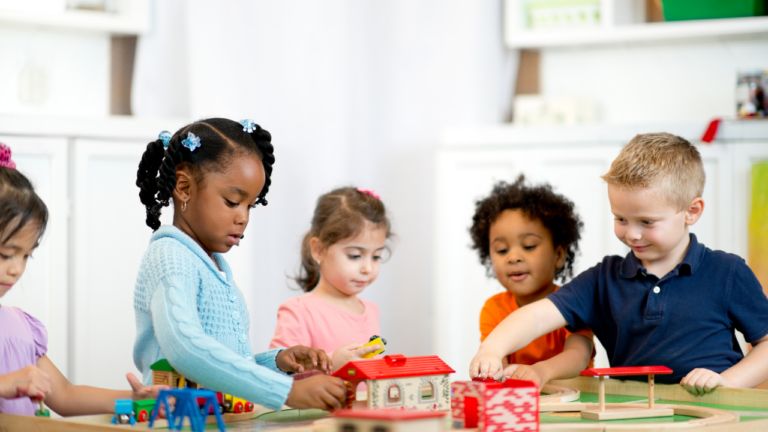
Sometimes children watch instead of joining in.
Other kids have already started. Materials are already being used. Everything feels like it’s already in motion.
If a child can’t find a clear place to step in… they often stay on the outside.
What Adults Often Do (And Why It Doesn’t Help)
When cooperation doesn’t happen, adults naturally respond by repeating directions. Sometimes with a little more urgency. Sometimes with a little more pressure.
But the more pressure we add, the less clear the moment becomes for the child.
What Helps Instead
What often helps the most is making the starting point clear.
Give a specific place to begin
Instead of: “Clean up.”
Try: “You can pick up the blocks over there.”
Instead of: “Help out.”
Try: “You can carry these books.”
Now the child knows exactly where to begin.
Make the task smaller
Instead of expecting full participation right away, look for just one action. One step. One small way in.
That small starting point often leads to more participation.
Show them where they fit
If a child is having trouble joining an activity, you can help them see their role. For example:
• “You can stand here and pass the cups.”
• “Start with these ones.”
Now the child has a clear place in what’s already happening.
Notice their effort
When they do something, even something small, name it.
• “You picked those up.”
• “That helped.”
This helps children see that their contribution matters.
What This Looks Like in Everyday Moments
Think about some common situations:
• A child standing still during cleanup
• A child wandering instead of lining up
• A child watching but not joining a group activity
Instead of seeing those moments as refusal, pause and ask:
• Do they know where to start?
• Does the task feel too big?
• Were they pulled away from something else?
• Can they see how they fit into what’s happening?
The Big Idea About Cooperation
Cooperation isn’t something we can force in the moment.
It depends on whether a child can see:
• How to enter the situation
• Where to begin
• What their part is
And when those pieces become clear… you’ll often see a very different response.