When “I Can’t Do It” Really Means “I Don’t Know What to Do Next”
If you spend time with young children, you’ve probably seen how quickly they shut down when something doesn’t work the first time.
It might look like pushing something away, saying “I can’t do it,” or walking off. Sometimes it turns into frustration. Other times, they immediately look for an adult to step in and fix it.
From the outside, it can feel like they are giving up too easily.
But most of the time, they are not giving up.
They simply don’t know what to do next. The “try again” step is not automatic yet.
Why This Matters Early On
In the moment, this can look like unfinished work, avoiding a task, or needing help with something they were close to doing on their own.
Over time, though, this pattern can grow into something bigger. Children may start avoiding anything that feels difficult or decide they are not good at something before they have really tried.
That is why it helps to shift the focus away from “don’t give up” and toward a smaller, more teachable skill: learning how to try again.
The Everyday Moments That Build This Skill
This does not happen during big lessons. It shows up in ordinary parts of the day.
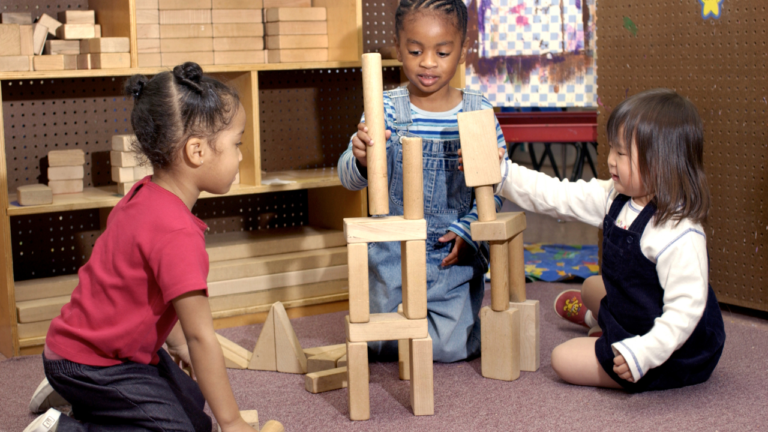
A puzzle piece does not fit. A drawing does not come out the way they expected. A block tower falls. A zipper gets stuck. A snack will not open.
These moments may seem small, but they are exactly where this skill develops.
A Simple Way to Support “Trying Again”
Instead of treating this like a lesson, it helps to respond in a consistent, simple way. Think of it as a small sequence you repeat throughout the day.
Step 1: Pause and acknowledge what happened
Before jumping in or offering reassurance right away, slow the moment down.
You might say, “That didn’t work.”
This shows the child that you see the problem without rushing past it. It also gives them a second to stay with the situation instead of immediately leaving it.
Step 2: Give a clear, doable next step
Telling a young child to “try again” is often too vague. They may not know what to change.
Instead, offer a specific direction they can act on.
You might say, “Turn it and try again,” or “Try a different spot,” or “Push a little softer.”
Now the child has a way to re-engage with the task.
Step 3: Keep the expectation small
There is no need for repeated attempts.
Saying, “Let’s try one more time,” keeps the effort manageable. One more try feels possible, even for a child who is starting to feel frustrated.
Step 4: Let the result be okay either way
After that one more try, the outcome does not need to be perfect.
If it works, that is great. If it does not, you can still reinforce the effort.
“You tried it again. That’s how we figure things out.”
This helps shift the focus from getting the right answer to staying with a challenge a little longer.
What This Looks Like Over Time
When children are supported in this way, something begins to change.
They start to pause instead of immediately stopping. They become more willing to make another attempt. Trying again becomes something they recognize, not something they avoid.
Perseverance begins, not in big, difficult tasks, but in small, repeated moments where something does not work and they learn what to do next.
A Small Shift That Makes a Big Difference
You do not need extra time, new materials, or a separate lesson to build this skill.
It is already happening in puzzles, play, art, getting dressed, and problem-solving throughout the day.
The difference comes from how those moments are supported.
When a child learns that there is always a next step, even a small one, they are more likely to stay engaged instead of shutting down.
And that simple habit of trying again is what builds the foundation for everything that comes later.