Helping Preschoolers Learn Kindness the Easy Way (Simple Steps That Work)
Some days it feels like no one remembers how to share. You remind kids to be kind, and five minutes later, someone is grabbing a toy and putting all their weight in it. It’s not that they forgot on purpose.
The truth is, kindness is not a rule to memorize; it’s a skill children build by watching us. When we show it and name it in real time, it starts to stick.
Why Kids Learn Kindness by Watching, Not Just Memorizing
Ages 3 to 5 are learning what words like kind, gentle, and helpful actually look like. They learn by seeing and hearing it in action.
Children build a kindness muscle the same way they learn to zip a jacket or pour water. Repetition helps. Clear examples help even more.
When an adult notices a kind act and names it out loud, it gives them a picture to copy. It also connects the word to the action, which is what they need most at this stage.
Try calling out small moments like these:
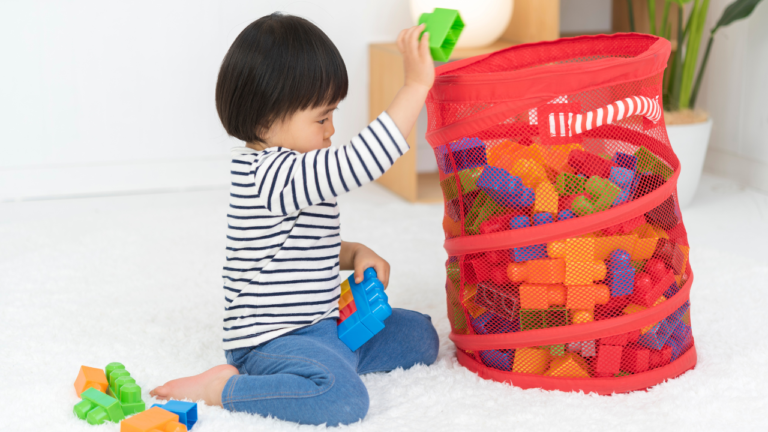
- Helping a friend pick up blocks, “That was so kind. You helped your friend clean up.”
- Offering a turn with a toy, “I heard you say, you can go first. That was kind.”
- Holding a door, “Thanks for holding the door. That was kind and helpful.”
- Bringing a tissue or a water bottle to someone who needs it, “You noticed and helped. That was kind.”
These little comments feel simple, but they make a big difference. Kids start to recognize patterns. They hear the word, they see the action, and it finally clicks.
The Role of Adults in Shaping Kindness
Young children are watching everything. Our words and actions set the tone. If we want kind kids, we need to use words and actions we wouldn’t mind hearing repeated in front of company. If our signals are mixed, it leaves it up to the children to interpret, which makes it harder for them to know what we actually want.
Try these quick shifts:
Choose positive phrases you want echoed back. Say, “Let’s try that again gently,” instead of “Stop being rough.”
Narrate your own behavior. “I’m going to wait my turn,” or “I’ll hold the door for you.”
Praise what you want repeated. “It was kind when you handed your sister her shoes.”
Breaking Down the “Do as I Say, Not as I Do” Mindset
Adults sometimes fall back on the old line, Do as I say, not as I do. From a child’s view, that feels confusing. It sounds like I know my actions don’t match my words, but do the opposite anyway.
That requires maturity kids don’t have yet. It also misses the fact that they learn more from what we do than what we tell them to do.
Why that doesn’t work:
Kids copy what they see, not what they hear.
Mixed messages slow learning and create stress.
Young children need simple, consistent models they can imitate.
How Constant Teaching Affects Parents and Caregivers
For parents and caregivers, you’re on the clock all day and night. Kids watch your tone, your reactions, and even your sighs in traffic. Teachers see it too! If mimicry is constant anyway, we can use it to our advantage.
Flipping the Script: Turning Mimicry into Positive Kindness
What if children repeated kind phrases instead of the ones that make us cringe? That can happen when they see kindness often and hear it named out loud.
Show kindness with your actions and your words, then point it out when you see it in others. This gives kids a clear script to follow.
Real-life spots to name kindness:
At the store: “She let us go first in line. That was so kind.”
In the hallway: “He held the door for us. That was kind and thoughtful.”
At home: “You gave your brother the last pancake. That was kind.”
On the playground: “You noticed she needed a turn on the swing. That was kind sharing.”
Pairing the word kind with the action teaches kids what to look for. Soon, they start pointing it out too, which is how you know it is sinking in.
Kids as Sponges: Absorbing Good and Bad
You’ve heard it before. Kids are like sponges. They soak up the clean water and the dirty water. In other words, they take in both the helpful habits and the not-so-helpful ones.
A lot of learning at this age isn’t formally taught in a lesson. It happens alongside everyday life because children are always watching.
You can see this in pretend play:
- Playing teacher with a pretend circle time.
- Taking care of a baby with blankets and bottles.
- Going to the doctor with a toy stethoscope.
They pick these up after watching adults at school, at home, and out in the community.
Why Pretend Play Reveals What They’ve Learned
Those sweet scenes are not scripted. They are kids acting out what they see unfolding right in front of them. That is proof that modeling and language matter. What they watch, they will replay.
Two Easy Actions to Start Teaching Kindness Today
You don’t need a giant curriculum to grow kindness in preschoolers. Start with two simple habits. They fit into daily life and work for both parents and teachers.
Model Kindness in Your Daily Life
Parents are a child’s first teacher, and teachers are powerful models too. Show what kindness looks like and sounds like. Children carry subtle habits home from school and bring home habits into school. Many of these are not taught directly. They’re absorbed.
You might be surprised by what kids repeat. When the language they hear is warm and clear, they start using it with friends and siblings.
Consistency builds the habit. If you repeat it, they will repeat it.
Point and Name Kindness in Everyday Routines
When you spot kindness, say it out loud so kids can make that connection between the word and the action. This is the bridge that helps kindness stick. Real-time comments help most because kids are in the moment with you.
Places to practice:
Home: play time, mealtimes, bath time. “You handed Dad the towel. That was kind helping.”
School: cleanup, lining up, group time. “You scooted to make space. That was kind.”
Outings: stores, parks, appointments. “She held the elevator. That was kind.”
Keep the phrases short. Use the word kind. Tie it directly to what happened.
Final Thoughts
Kindness sticks when kids see it, hear it, and try it. They are watching us, copying us, and building their kindness muscle one small act at a time. Model it, then point it out in real life so they can connect the word to the action.
Start today with one phrase and one small act, and let those tiny repetitions do the heavy lifting.