When Kids Notice Differences (And What to Do in That Moment)
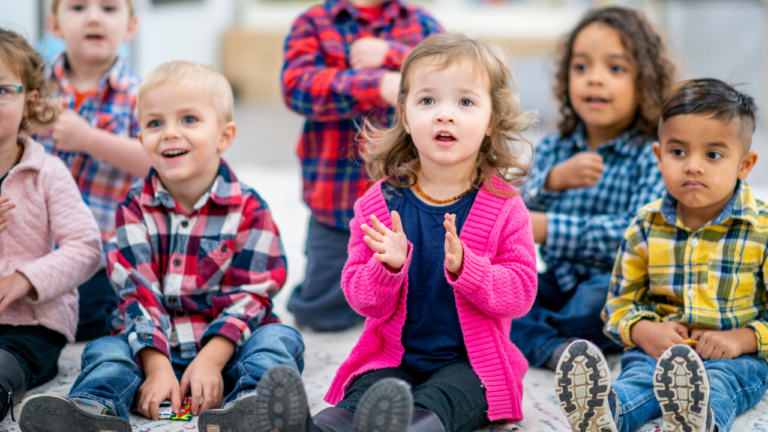
If you spend any time with 3–5 year olds, you know how closely they observe the world around them. They notice how someone talks, what another child brings for lunch, a family routine that sounds different from their own, a name they haven’t heard before, or the way someone pronounces a word. And sometimes, without hesitation, they comment on it.
It might come out as, “That’s weird,” or a giggle, or a statement that makes every adult in the room suddenly very aware of who is listening.
Most adults respond quickly, by saying, “That’s not nice,” or “Be kind,” or “Shhh.” The moment passes, at least on the surface.
But for the child, the important question often remains unanswered.
They’re Not Trying to Be Unkind
In my years working with young children, I saw this pattern again and again. When children point out differences, they are rarely trying to be unkind. More often, they are trying to make sense of what they’ve noticed.
Young children organize their world by sorting and categorizing. They look for what is the same and what is different because that’s how their brains build understanding.
The noticing itself isn’t the problem.
The challenge comes when they notice something and don’t know what to do with that information.
Why “Be Nice” Isn’t Enough
When we respond only with “Be nice” or “Don’t say that,” we assume children understand what those instructions look like in real time. But in the moment, many of them don’t.
They may feel curious and uncertain at the same time. They may sense tension in the room. They may realize they did something “wrong,” but have no idea what would have been better.
Without a replacement behavior, they fall back on whatever has worked before. That might be laughing, pointing, repeating something they’ve heard, or, in some cases, avoiding the person altogether the next time. None of those responses helps them learn how to interact thoughtfully with others.
What does help is surprisingly simple.
What Actually Helps in the Moment
You don’t need a prepared lesson. You don’t need a long explanation. Often, you need less than 30 calm seconds.
When a child points something out, start by staying steady. Your tone communicates safety more than your words ever will. Treat it as a normal observation rather than a crisis.
Then acknowledge what they noticed in neutral language. You might say, “You noticed something new,” or “You heard that they say it differently.” This validates their observation without judging it.
Finally, give them something clear and concrete to do instead. You could model, “You can ask about it,” or “People do things differently, and you can still play together.” Sometimes it’s as simple as offering a question they can use: “You could say, ‘Can you tell me about that?’”
Now the child has an action, not just a correction.
Why These Small Moments Matter
This matters because children are forming ideas about people long before they fully understand fairness or inclusion. They are watching who gets included easily and who becomes the focus of attention. They are observing how adults react to differences. If we only silence the comment, they still draw conclusions on their own.
When we guide the moment, however, they begin to learn that differences can lead to understanding rather than distance.
Over time, with consistent modeling, something shifts. Instead of reacting with surprise or discomfort, they begin responding with curiosity. They learn that noticing is not something to suppress, but something to handle with care.
Inclusion Is Something They Learn
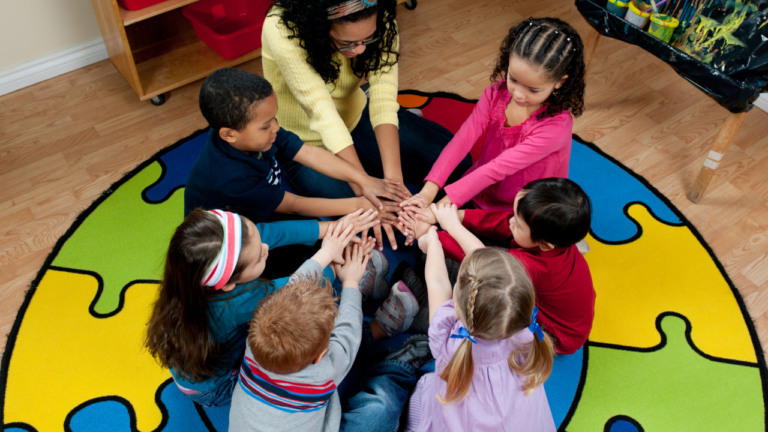
Children will not automatically know how to include others. Inclusion is not just a rule adults tell them; it is a skill we help them practice. They are constantly collecting examples from what they see and hear, and they repeat what appears to work.
When we move beyond “Don’t say that” and offer “Here’s what you can do instead,” we give them something useful to copy.
That consistency is what helps children move from reacting to understanding.